Learn how inflation affects construction costs in Kenya, including materials, labour, and budgets, plus practical strategies to manage rising costs effectively.
Introduction: Why Inflation Matters in Construction
How Inflation Affects Construction Costs in Kenya
Inflation refers to the gradual increase in the prices of goods and services over time, which reduces the purchasing power of money. In simple terms, the same amount of money buys fewer materials, labour hours, or services than it did before. In Kenya, inflation has become a major factor influencing the cost of construction, affecting everything from basic materials like cement and steel to transportation and skilled labour.
As inflation rises, construction costs tend to increase significantly. Developers, contractors, and homeowners often find that initial budgets quickly become insufficient, forcing them to either inject more funds or scale down their projects. This has led to real-world challenges across the country, including stalled construction projects, delayed timelines, and unexpected cost overruns that strain finances.
Recent industry insights, such as those highlighted by Goldberry, show that construction costs in Kenya are not only rising but also fluctuating unpredictably. These fluctuations make it difficult to plan effectively, especially for long-term projects like apartment developments and commercial buildings.
Understanding how inflation impacts construction is therefore essential for anyone planning to build. This article explores the key causes of inflation in Kenya, how it directly and indirectly affects construction costs, and practical strategies you can use to manage these challenges and protect your investment.
Understanding Inflation in Kenya’s Economy
Inflation in Kenya is driven by several key factors that directly influence the cost of living and doing business. One of the biggest contributors is the rising cost of fuel, which affects transportation, manufacturing, and energy prices. When fuel prices increase, the cost of moving construction materials such as cement, steel, and sand also rises. Taxes and government levies, including VAT and import duties, further push up prices, especially since Kenya relies heavily on imported construction materials and equipment. Additionally, fluctuations in the Kenyan shilling against foreign currencies make imports more expensive, amplifying inflationary pressure.
The Central Bank of Kenya plays a critical role in controlling inflation by adjusting interest rates and regulating money supply. When inflation rises too quickly, the bank may increase interest rates to reduce spending and stabilize prices. In recent years, Kenya has experienced periods of both stability and sharp inflation spikes, often influenced by global economic conditions, drought, or currency depreciation.
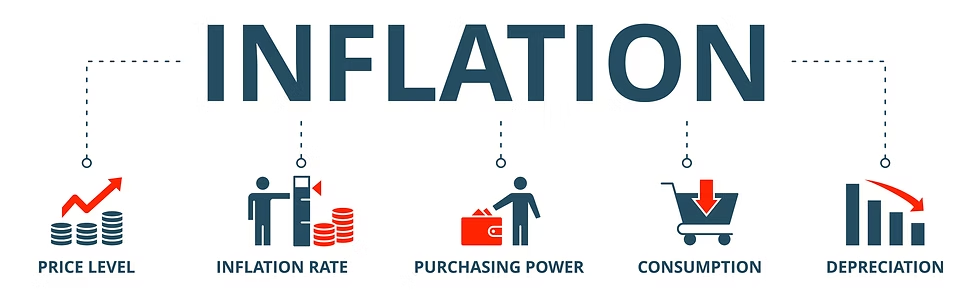
Inflation directly affects purchasing power, meaning individuals and businesses can afford less with the same amount of money over time. For developers and homeowners, this translates into higher construction costs and reduced project affordability.
A key measure used to track inflation is the Consumer Price Index (CPI), which monitors the average change in prices of goods and services over time. As CPI rises, it signals increasing inflation—an important indicator for anyone planning a construction project in Kenya.
Overview of Construction Costs in Kenya
Construction costs in Kenya are influenced by several key components, with building materials taking the largest share—typically between 35% and 60% of the total project cost. These materials include cement, steel, sand, ballast, timber, and finishing products, all of which are highly sensitive to market price changes. In addition to materials, other major cost components include labour (skilled and unskilled workers), equipment (machinery and tools), and transport, which covers fuel and logistics involved in moving materials to the construction site.
According to data from the Kenya National Bureau of Statistics, construction costs in Kenya are tracked using the Construction Input Price Index (CIPI). This index measures changes in the prices of key inputs—materials, labour, equipment, and transport—based on quarterly data collected from suppliers and contractors.
Recent KNBS reports show that construction costs are constantly fluctuating. For example, in 2025, the index rose in some quarters due to increases in steel, sand, and fuel prices, while in other periods it declined due to falling costs of cement and timber. These fluctuations highlight how dynamic and unpredictable the construction sector can be.
Construction costs are highly sensitive to economic changes because most inputs depend on external factors such as inflation, exchange rates, fuel prices, and government policies. Even small shifts in the economy can significantly impact overall project costs, making accurate budgeting and planning essential for developers and homeowners in Kenya.
How Inflation Directly Affects Construction Costs
Inflation has a direct and often immediate impact on construction costs in Kenya, affecting nearly every input required to complete a project. From materials to labour and logistics, rising prices can significantly alter project budgets and timelines. Below is a breakdown of the key areas where inflation has the most direct influence.
Increase in Material Prices
Construction materials are the most affected by inflation, and since they account for the largest share of project costs, even small price increases can have a major impact. Key materials such as cement, steel, timber, sand, and finishing products often experience frequent price fluctuations.
Inflation drives up manufacturing costs due to higher energy prices, increased cost of raw materials, and expensive importation processes. For instance, steel prices may rise due to global demand and currency depreciation, while cement prices can increase بسبب higher fuel and production costs.
Research published on ScienceDirect confirms a strong correlation between inflation and material prices, showing that as inflation rises, construction material costs tend to increase proportionally. This makes budgeting more difficult and forces developers to constantly adjust estimates.
Rising Labour Costs
Labour costs in Kenya are also directly affected by inflation. As the cost of living increases, workers demand higher wages to maintain their standard of living. This applies to both skilled and unskilled labour, including masons, carpenters, electricians, and plumbers.
Additionally, shortages of skilled labour in certain regions further drive up wages. Contractors often have to offer better pay to attract and retain qualified workers, especially for specialized tasks. This results in increased overall project costs, particularly for large-scale developments that require extended labour periods.
Higher Transport and Fuel Costs
Fuel is a critical driver of inflation in Kenya, and its impact on construction cannot be overstated. When fuel prices rise, transportation costs increase across the entire supply chain—from moving raw materials from suppliers to delivering finished products to the construction site.
This leads to higher costs for materials like sand, ballast, and cement, especially when sourced from distant locations. Contractors must also factor in increased costs for operating machinery and vehicles on-site. As a result, logistics becomes more expensive, contributing significantly to the overall rise in construction costs.
Equipment and Machinery Costs
Inflation also affects the cost of construction equipment and machinery. Hiring rates for equipment such as excavators, mixers, and cranes tend to increase as operating expenses rise. This includes higher fuel consumption, maintenance costs, and operator wages.
Moreover, spare parts and servicing costs become more expensive, especially when imported. This increases the total cost of equipment ownership and rental, which is ultimately passed on to the client.
Indirect Effects of Inflation on Construction Projects
While inflation directly increases the cost of materials, labour, and transport, it also creates several indirect challenges that can significantly affect the success of construction projects in Kenya. These effects are often less visible at the planning stage but can have serious financial and operational consequences.
Project Delays and Cost Overruns
One of the most common indirect effects of inflation is project delays. As prices of materials and services rise unexpectedly, initial budgets quickly become outdated. This creates a mismatch between planned and actual costs, forcing developers to pause construction while sourcing additional funds.
Inflation also introduces uncertainty into project timelines. Contractors may delay procurement in anticipation of price changes or struggle with inconsistent supply, leading to extended project durations. These delays further increase costs due to prolonged labour, site management, and equipment usage.
Reduced Profit Margins for Contractors
Inflation can significantly reduce profit margins, especially for contractors working under fixed-price contracts. In such agreements, the contract price is agreed upon before construction begins. However, if material and labour costs rise during the project, contractors are often forced to absorb the additional expenses.
This can lead to financial strain, reduced profitability, or even losses. In extreme cases, contractors may abandon projects or compromise on execution to minimize losses, affecting the overall quality and completion timelines.
Reduced Investment in Real Estate
High and unpredictable inflation discourages investment in construction and real estate. Developers may postpone or cancel projects due to uncertainty around future costs and returns on investment.
This slowdown affects the entire construction sector, leading to reduced job opportunities, slower economic growth, and limited housing supply. Investors tend to adopt a “wait-and-see” approach until the economic environment stabilizes.
Quality Compromises
To cope with rising costs, some developers and contractors may resort to using cheaper materials or reducing project specifications. While this may help control short-term expenses, it often results in lower construction quality and reduced durability of buildings.
Over time, such compromises can lead to higher maintenance costs, safety risks, and reduced property value. This highlights the importance of proper planning and cost management to avoid sacrificing quality due to inflation pressures.
Key Drivers of Construction Cost Inflation in Kenya
Construction cost inflation in Kenya is influenced by a combination of local and global economic factors. Understanding these drivers is essential for developers, contractors, and homeowners to better anticipate cost changes and plan effectively.
Currency Depreciation
One of the most significant drivers of construction cost inflation in Kenya is the depreciation of the Kenyan shilling. Since a large portion of construction materials, machinery, and finishing products are imported, a weaker currency makes these imports more expensive.
For example, items such as steel, tiles, electrical fittings, and heavy equipment are often priced in foreign currencies like the US dollar. When the shilling loses value, the cost of purchasing and importing these materials increases, directly pushing up construction costs. This also affects locally produced materials that rely on imported raw inputs or machinery.
Global Supply Chain Disruptions
Global events have a major impact on Kenya’s construction sector. Disruptions caused by the COVID-19 pandemic, international trade restrictions, and geopolitical conflicts have led to shortages of key materials and delays in shipments.
According to insights from Goldberry, such disruptions have caused unpredictable price spikes in construction inputs, especially steel and cement. When supply is limited and demand remains high, prices naturally increase, making construction projects more expensive and difficult to plan.
Government Policies and Taxes
Government policies and taxation also play a critical role in driving construction cost inflation. Taxes such as Value Added Tax (VAT), import duties, and levies on fuel directly increase the cost of materials and services.
In addition, regulatory requirements, permit fees, and compliance costs can add to the overall expense of construction projects. Changes in government policy—such as new taxes or adjustments to existing ones—can quickly affect the affordability of building projects across the country.
Demand and Urbanization
Rapid urbanization in Kenya, especially in cities like Nairobi, Kisumu, and Mombasa, has led to increased demand for housing and commercial spaces. As more people move to urban areas, the demand for construction materials, labour, and land rises.
This high demand often exceeds supply, creating upward pressure on prices. Developers competing for limited resources may end up paying more for materials and labour, further driving construction cost inflation.
Energy Costs
Energy is a major input in the production of key construction materials such as cement and steel. These industries rely heavily on electricity and fuel for manufacturing and processing.
When energy costs rise—due to higher fuel prices or electricity tariffs—the cost of producing these materials increases. Manufacturers then pass these costs on to consumers, leading to higher market prices. This makes energy costs a critical and often overlooked driver of construction cost inflation in Kenya.
Real Data: Construction Cost Trends in Kenya (2024–2026)
Recent data from the Kenya National Bureau of Statistics (KNBS) clearly shows how construction costs in Kenya have been changing over time. The Construction Input Price Index (CIPI), which tracks the cost of materials, labour, equipment, and transport, has recorded noticeable fluctuations between 2024 and 2026.
For example, in the third quarter of 2025, the CIPI rose to 121.27, up from 119.75 in the previous quarter, reflecting a 1.27% increase in construction input costs. This increase was mainly driven by higher prices of key materials such as steel, cement, and electrical fittings. However, in the following quarter (Q4 2025), the index slightly declined to around 120.15, showing that costs can also fluctuate downward depending on market conditions
In simple terms, the CIPI works like a “cost thermometer” for construction. When the index rises, it means building is becoming more expensive; when it falls, costs are easing slightly. Even small percentage increases can have a big impact on project budgets. For instance, a 1–2% rise in input costs can translate into hundreds of thousands of shillings in additional expenses for large projects such as apartments or commercial buildings.
This data highlights an important reality: construction costs in Kenya are not static. They change frequently due to inflation and market forces, making it essential for developers and homeowners to monitor trends closely and plan their budgets with flexibility.
Short-Term vs Long-Term Effects of Inflation
Inflation affects construction costs in Kenya in both the short term and the long term, with each having different implications for developers, contractors, and homeowners.
In the short term, inflation often leads to sudden price spikes in key construction inputs such as cement, steel, and fuel. These abrupt increases can disrupt project budgets, especially when costs rise after construction has already begun. For example, a developer who planned a project based on current prices may be forced to adjust the budget midway due to unexpected increases in material or labour costs. This can lead to delays, scaling down of project scope, or even temporary suspension of construction activities. Short-term inflation is therefore highly disruptive and difficult to predict, making it a major risk factor in project execution.
In the long term, inflation has a more gradual but equally significant impact. Over time, it leads to a steady increase in the cost per square meter of construction. What may have cost KSh 35,000 per square meter a few years ago could rise to KSh 45,000 or more due to cumulative inflation effects. This long-term trend makes construction increasingly expensive, reducing affordability for both developers and homebuyers.
Research from Kenyatta University Journal indicates that inflation can also have a delayed impact on construction growth. As costs continue to rise over time, investment in new projects may slow down, affecting the overall expansion of the construction sector.
Understanding both short-term shocks and long-term trends is essential for effective planning, budgeting, and decision-making in Kenya’s construction industry.
How to Manage Inflation in Construction Projects
Managing inflation in construction projects is critical to maintaining budget control and ensuring successful project delivery. While inflation cannot be avoided, developers and contractors can adopt practical strategies to minimize its impact and protect their investments.
Accurate Cost Estimation
The first step in managing inflation is preparing a realistic and flexible budget. This involves not only estimating current construction costs but also factoring in a contingency or inflation margin. By allowing for possible price increases—typically an additional 5–15% depending on project duration—developers can avoid financial strain if costs rise during construction. Regularly updating cost estimates based on market trends also helps keep budgets relevant and reliable.
Early Procurement of Materials
One of the most effective ways to reduce the impact of inflation is purchasing key materials early. By securing items such as cement, steel, and finishing materials in advance, developers can lock in current prices and avoid future increases. Bulk purchasing and establishing strong relationships with suppliers can also lead to discounts and better price stability. This strategy is especially useful for large projects with predictable material needs.
Flexible Contract Structures
Traditional fixed-price contracts can expose contractors and developers to significant risks during inflationary periods. To manage this, it is advisable to use flexible contract structures that include escalation clauses. These clauses allow for adjustments in contract prices based on changes in material costs, labour rates, or inflation indices. This approach ensures fairness for both parties and reduces the likelihood of disputes or project abandonment.
Value Engineering
Value engineering involves optimizing building design and construction methods to achieve cost efficiency without compromising quality. This may include using alternative materials, simplifying designs, or adopting modern construction technologies. The goal is to reduce unnecessary expenses while maintaining functionality, safety, and durability. When done correctly, value engineering can significantly lower project costs even in an inflationary environment.
Efficient Project Management
Delays are one of the biggest contributors to increased construction costs during inflation. Efficient project management ensures that work is completed on schedule, minimizing exposure to rising prices. This includes proper planning, timely procurement, effective supervision, and coordination of all project activities. By reducing delays and avoiding rework, developers can limit cost escalations and keep projects within budget.
Practical Tips for Developers and Homeowners in Kenya
Building successfully in an inflation-driven economy like Kenya requires careful planning and smart decision-making. Developers and homeowners can significantly reduce risks and control costs by applying a few practical strategies before and during construction.
One of the most important tips is to start construction during relatively stable economic periods. When inflation is lower or prices are stable, budgets are more predictable, reducing the risk of sudden cost escalations. Monitoring economic trends before starting a project can help in timing the construction phase more effectively.
Working with experienced and reputable contractors is also essential. Skilled professionals understand market fluctuations and can help with accurate cost estimation, efficient procurement, and proper project scheduling. This reduces wastage and prevents costly mistakes that often arise from poor planning or inexperience.
Another key strategy is to prioritize locally available materials. Materials sourced within Kenya, such as sand, ballast, and some types of timber, are less affected by foreign exchange fluctuations and import-related inflation. This helps stabilize costs and reduces dependency on unpredictable global markets.
Finally, developers should regularly monitor market trends before and during construction. Tracking prices of cement, steel, fuel, and other inputs allows for timely adjustments in budgeting and procurement decisions. Staying informed helps avoid surprises and ensures better financial control throughout the project lifecycle.
By applying these practical tips, developers and homeowners in Kenya can better manage inflation risks and complete construction projects more efficiently and cost-effectively.
Future Outlook: Will Construction Costs Keep Rising?
Looking ahead, construction costs in Kenya are likely to remain influenced by inflation, meaning gradual increases are still expected in the coming years. Factors such as fuel prices, currency fluctuations, and global market conditions will continue to play a key role in shaping the cost of building materials and services.
However, there is potential for some stability. Government interventions through better fiscal policies, improved infrastructure, and tax adjustments could help reduce extreme price fluctuations. Efforts to support local manufacturing of construction materials may also lower dependence on imports, helping to stabilize long-term costs.
In addition, advancements in construction technology—such as prefabrication, automation, and modern building methods—may improve efficiency and reduce waste, ultimately helping to control expenses. Increased use of locally sourced materials will also play a key role in cushioning the industry from global economic shocks.
Despite these positive developments, developers and homeowners must continue to plan strategically. Inflation will remain a structural factor in the economy, so careful budgeting, timely decision-making, and professional guidance will be essential for successful construction projects in Kenya’s evolving market.
Conclusion: Understanding Inflation is Key to Smart Construction
Inflation is one of the most important factors shaping construction costs in Kenya today. As discussed throughout this article, it affects every stage of a project—from the price of materials and labour to transport, equipment, and overall project timelines. Both direct and indirect effects of inflation can significantly alter budgets, delay completion, and reduce profitability if not properly managed.
Directly, inflation increases the cost of essential inputs such as cement, steel, fuel, and wages. Indirectly, it leads to project delays, reduced investor confidence, and even quality compromises when developers attempt to cut costs. This makes construction planning more complex and financially demanding in an unpredictable economic environment.
Because of these challenges, proper planning and professional guidance are no longer optional—they are essential. Developers and homeowners who understand inflation dynamics are better positioned to make informed decisions, avoid unnecessary losses, and complete projects successfully.
Ultimately, inflation awareness becomes a competitive advantage in the construction industry. Those who plan strategically, monitor market trends, and work with experienced professionals are more likely to deliver projects on time, within budget, and at the desired quality level. In a market like Kenya, where costs continue to fluctuate, knowledge and preparation are the strongest tools for construction success.
CALL TO ACTION
Ready to start your construction project in Kenya without being affected by rising inflation?
Work with professionals who understand:
✔ Accurate construction cost estimation
✔ Inflation-proof budgeting strategies
✔ Smart material sourcing and procurement
✔ Efficient project management and supervision
Whether you’re building a residential home, rental apartments, or a commercial property, the right team can help you control costs, avoid delays, and maximize your investment returns even in a changing economic environment.
Contact us today for:
• Expert consultation
• Detailed and up-to-date cost estimates
• End-to-end construction project management
Don’t let inflation derail your dream project.
Build smart. Build cost-efficient. Build with confidence.