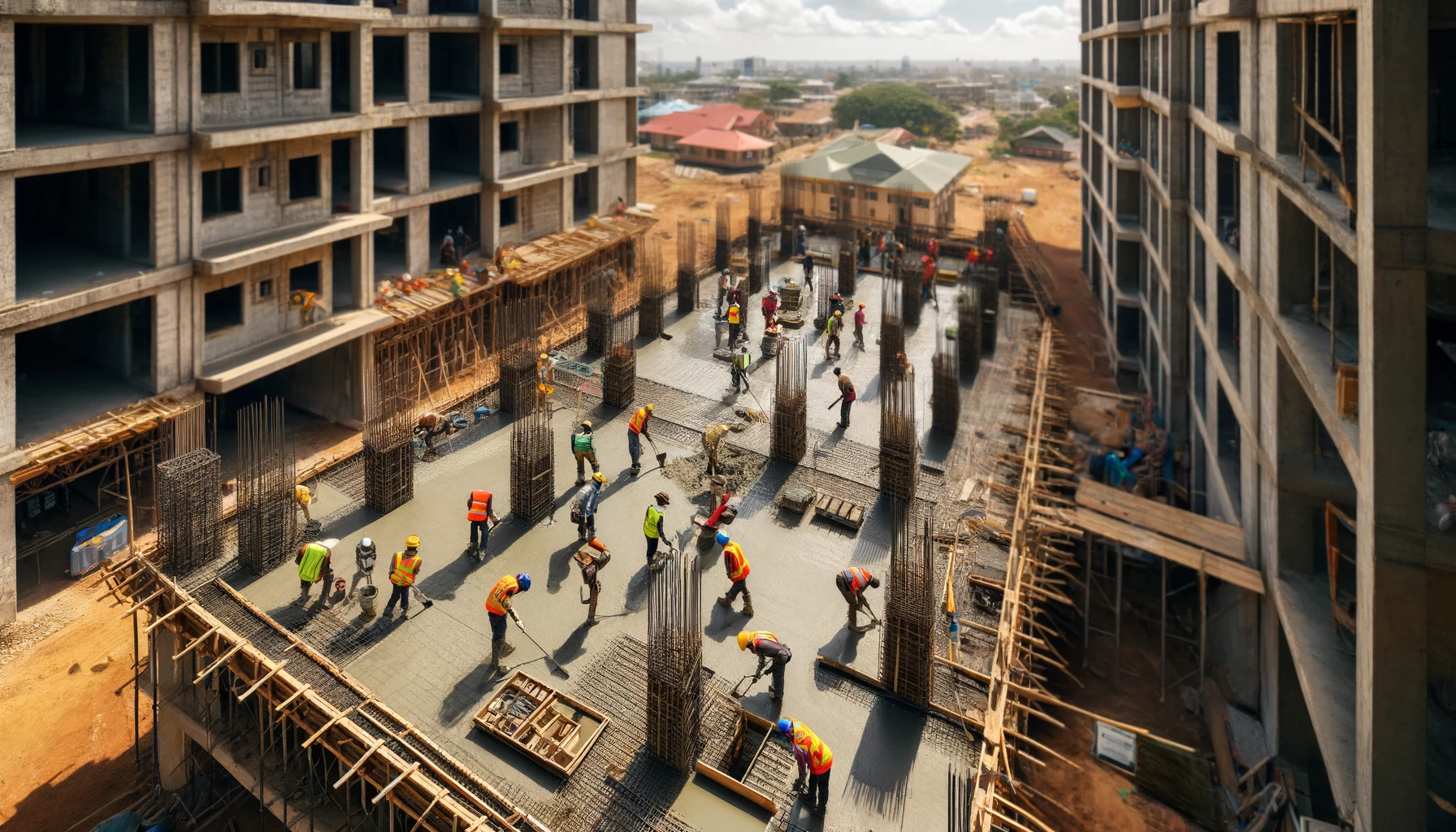
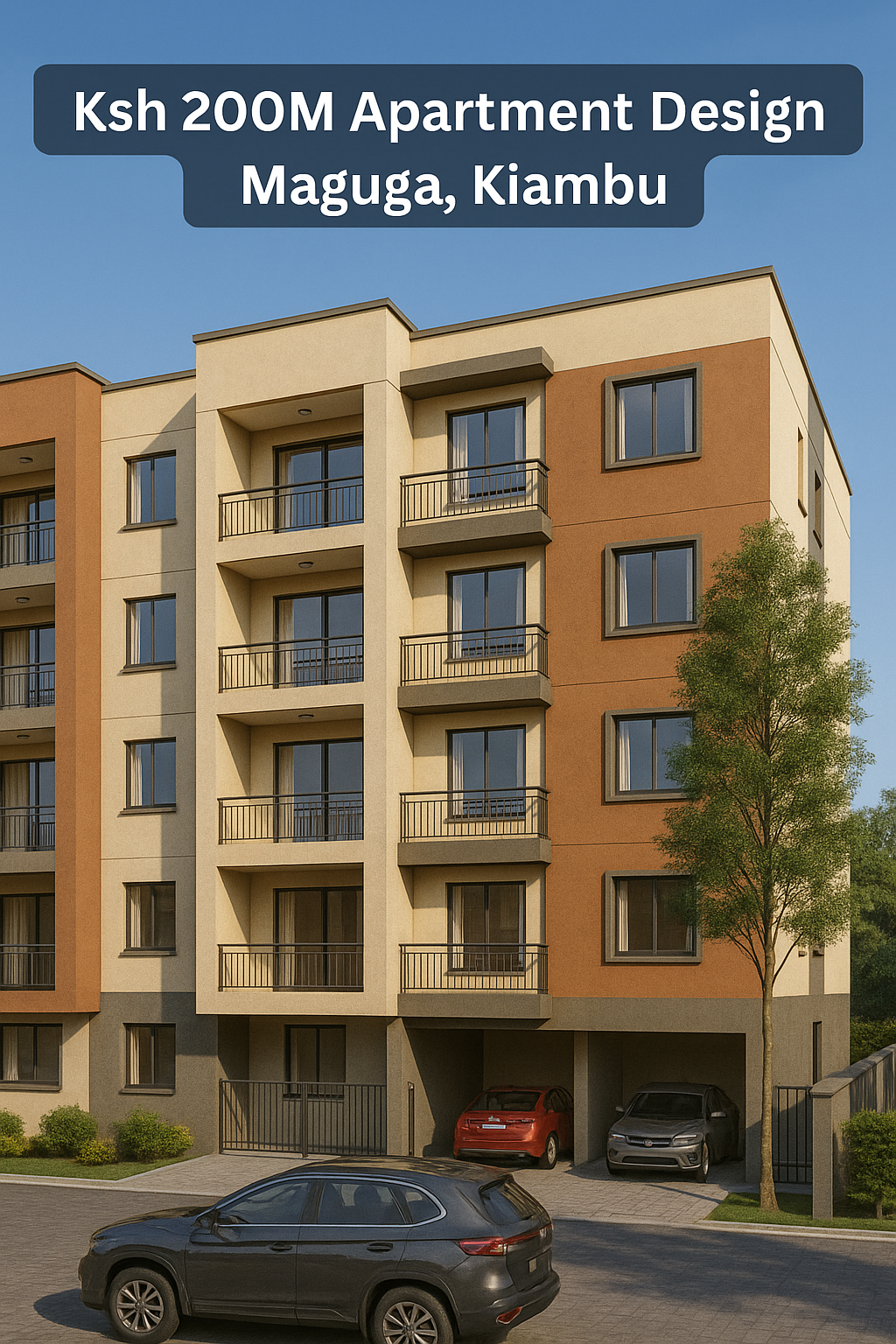
If your plot sits on dark, sticky clay that cracks into deep fissures in the dry season and turns to mud when it rains, you are dealing with expansive soil. Black cotton soil construction is one of the most common engineering challenges in Kenya, from the Lake Victoria basin and Western Kenya to parts of Machakos, Kajiado and Nairobi’s eastern suburbs. Build on it the same way you would on firm murram and you risk cracked walls, lifted floor slabs, jammed doors and, in the worst cases, structural failure.
The good news is that black cotton soil is a design problem, not a reason to abandon a plot. With proper investigation and the right foundation detail, homes, apartments and commercial buildings stand on it safely for decades. This guide explains what makes the soil so troublesome, how engineers deal with it, and what it means for your budget. If you need a site assessed or a foundation designed, the structural engineering solutions by Marble Engineering cover soil assessment, foundation design and site supervision.
Building on black cotton soil? Get an engineer to look at your plot first: WhatsApp 0789 217 685
What makes black cotton soil an expansive soil
Black cotton soil is a fine-grained, highly plastic clay. Research on Kenyan samples published in the journal Coatings (MDPI, 2022) found clay minerals such as montmorillonite, illite and vermiculite to be abundant, and it is these minerals that absorb water and expand. The same study describes the soil as having high swell potential, low shear strength, low bearing capacity and excessive compression.
In practice this means the ground moves with the seasons:
- Wet season: the clay takes up water and swells, pushing up on floor slabs and foundations.
- Dry season: it shrinks and opens deep cracks, so the support under the building drops away unevenly.
- Uneven moisture: a leaking pipe, a blocked gutter outlet or a tree close to the wall makes one part of the building move more than another, which is what causes diagonal cracks.
A report in the Daily Nation on Homa Bay town described how this volume change leaves poorly designed structures “primed for collapse” and makes foundations along the lakeshore noticeably more expensive.
Signs your plot has black cotton soil
- Dark grey to black topsoil that becomes very sticky and slippery when wet.
- Wide, deep shrinkage cracks in a polygon pattern during dry months.
- Water ponding for days after rain because the clay drains poorly.
- Neighbouring buildings with cracked walls, sunken verandahs or lifted floor tiles.
- Local roads and murram tracks that deform badly in the rains.
These signs tell you to investigate; they do not tell you how deep the problem goes. That needs testing.
Step one: test before you design
Every sound piece of black cotton soil construction starts with a site investigation. Trial pits or boreholes show how thick the clay layer is and what lies beneath it, and laboratory tests tell the engineer how the soil will behave. Engineers quoted in the Homa Bay report recommend assessing swelling pressure, shrinkage, consolidation (compressibility) and strength before deciding whether and how to build.
Typical tests include:
- Atterberg limits (liquid limit, plastic limit, plasticity index) to measure how plastic and expansive the clay is.
- Free swell and swelling pressure to estimate how hard the soil will push on a slab or footing.
- Moisture content and density at different depths.
- Bearing capacity of the firmer stratum below the clay, which is often the layer the foundation will sit on.
For a three-storey apartment block or anything heavier, a full geotechnical report is essential. For a bungalow, trial pits plus basic laboratory tests are often enough for the engineer to choose a safe option. Our guide to structural engineer fees in Kenya explains how this work is priced.
Engineering solutions for black cotton soil construction
There is no single answer. The right solution depends on how deep the clay goes, how heavy the building is and the budget. These are the options engineers use most often in Kenya.
1. Soil replacement
Where the clay layer is shallow, the simplest fix is to dig it out and take the foundation down to firm ground. The engineer quoted in the Homa Bay report advises removing the black cotton soil entirely where it is only about 1 to 1.5 m deep and founding below it. The excavation is then backfilled with approved, well-compacted material such as murram or hardcore in layers. Soil replacement is reliable, but carting away clay and bringing in fill adds cost and time, so it is best suited to shallow deposits.
2. Deeper strip or pad foundations
Where firm material is reachable, footings can be taken below the zone of seasonal moisture change so that swelling and shrinking happen above the base of the foundation. The walls between ground level and the footing are then protected from the clay’s sideways pressure with a granular backfill. Our earlier article on foundation types in Kenya explains strip, pad, raft and pile foundations in detail; here we focus on how they are adapted for expansive soil.
3. Raft foundations
A reinforced concrete raft spreads the building load over the whole footprint and moves as one stiff unit, so the building rides small soil movements instead of cracking. Rafts on clay are usually placed on a layer of compacted granular fill to even out moisture changes underneath. They suit light to medium buildings on deep clay where digging out all of it is not practical.
4. Piles or under-reamed piles
Where the clay is deep and the building is heavy, piles carry the load through the expansive layer into firm strata. Ground beams span between the piles and are kept clear of the clay with a void former or compressible layer, so the soil can swell without lifting the structure. Piles cost more, but on deep black cotton soil they are often the only safe option for multi-storey buildings.
5. Soil stabilisation
Lime reacts with clay minerals and reduces plasticity and swell. In the MDPI study on a Western Kenya sample, adding 4% lime raised the soil’s CBR from 1.7% to 19% and cut its expansion from 4% to 0.4%. That research was aimed at road subgrades, but the same principle is used for driveways, parking areas and the fill under ground slabs. Stabilisation must be designed and tested; it is not a matter of tipping a few bags of lime into the trench.
Choosing the right approach: a quick comparison
| Site condition | Typical solution | Main cost driver |
|---|---|---|
| Clay up to about 1–1.5 m over firm ground | Soil replacement and conventional strip footing | Excavation, cart-away and imported fill |
| Moderate depth of clay, single-storey or light building | Deepened strip/pad footings or a stiff raft on granular fill | Concrete and reinforcement volumes |
| Deep clay, multi-storey building | Piles with suspended ground beams | Piling rig, depth of piles, testing |
| Driveways, yards and slab bases | Lime or lime–pozzolan stabilisation | Stabiliser quantity, mixing and compaction |
Building details that protect the structure
Foundations are only half the job. On expansive soil, the rest of the building must be detailed to tolerate small movements and to keep water away from the clay.
- Ring beams: continuous reinforced concrete bands at plinth, lintel and eaves level tie the walls together. The engineer in the Homa Bay report recommends bands of about 10–15 cm depth at each of these levels.
- Suspended or reinforced floor slabs instead of a thin slab cast straight onto the clay.
- Wide aprons and good drainage around the building so roof water is carried well away from the walls.
- Flexible plumbing joints where pipes enter the building, so movement does not break them and soak the soil.
- No thirsty trees close to the walls, since roots dry the clay unevenly.
- Build in the dry season where possible, as the Homa Bay engineer advises, so the soil is not saturated when foundations are cast.
What it means for your budget and timeline
Building on black cotton soil almost always costs more at foundation stage than building on firm ground. The extra comes from deeper excavation, cart-away and fill, more concrete and steel, and testing. We do not quote a single figure because the difference depends so much on the depth of clay and the type of building. What we can say is that the foundation is the cheapest place to solve the problem: repairing cracked walls and lifted floors later is disruptive and costs far more than doing it right the first time.
When you prepare your budget, ask your engineer and quantity surveyor to price the foundation as a separate item once the soil results are in. Our guide to the cost of building a 3 bedroom house in Kenya shows where foundations sit in an overall budget.
Mistakes to avoid when building on expansive soil
- Copying a neighbour’s foundation without testing your own plot.
- Casting a ground slab directly on clay with no granular layer.
- Leaving roof water to discharge next to the walls.
- Building a heavy maisonette or apartment on footings designed for a bungalow.
- Skipping supervision, so the foundation is not taken to the depth the engineer specified.
Frequently asked questions
Can I build a storey building on black cotton soil?
Yes. Multi-storey buildings stand on black cotton soil across Kenya, but they need a geotechnical investigation and a properly engineered foundation, often piles or a deep raft. The heavier the building, the more important the soil data becomes.
Is soil replacement always necessary on a foundation on clay?
No. Soil replacement works well where the clay is shallow. Where it is deep, digging it all out becomes uneconomic, and a raft, deepened footing or pile solution is usually better. The test results decide.
My house on black cotton soil already has cracks. What should I do?
Have a structural engineer inspect it before patching. The engineer will check whether the cracks are still moving, look at drainage, leaks and trees, and recommend repairs such as improved drainage, underpinning or strengthening. Filling cracks without fixing the cause only hides the problem.
Build safely on black cotton soil
From soil testing to foundation design and site supervision, our structural engineering solutions by Marble Engineering help you build on expansive soil with confidence. Send us your plot location and the building you have in mind.
Or call 0789 217 685 / 0724 481 087.